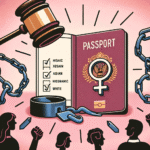
In a significant development that resonates deeply with the ongoing conversation about gender identity, a recent court ruling has declared that the government cannot impose restrictions on sex markers for many transgender and nonbinary individuals when it comes to obtaining passports. This decision underscores a broader recognition and validation of diverse gender identities and highlights the challenges that many face in navigating a system that has historically been rigid and exclusionary.
The ruling is poised to pave the way for many individuals who have long been deprived of the right to have their identities accurately reflected in crucial documents. Until now, many transgender and nonbinary people have grappled with the limitations of binary gender options on passports, often feeling that their personal identity does not align with legal documents. This ruling signals a vital step towards inclusivity and supports a growing societal acknowledgment that gender is not merely binary.
From a societal standpoint, this change is emblematic of a larger shift towards embracing identity in all its forms. Legal acknowledgment of nonbinary and transgender identities in official documents is not just a personal triumph for many; it has broader implications for equality and human rights. By dismantling restrictive gender markers, the ruling recognizes the importance of self-identification and encourages a more nuanced understanding of gender as a spectrum.
Critics might argue that such changes could complicate bureaucratic processes; however, the emotional, psychological, and social relief that comes from being able to authentically represent oneself cannot be overstated. The benefits of fostering a more inclusive and understanding society far outweigh the potential logistical challenges that could arise from adjusting government policies. By aligning immigration and identity documentation with the realities of individual experiences, the government takes a crucial step towards greater social justice.
Ultimately, this ruling serves as a reminder that the fight for equality is ongoing and that legal systems must evolve alongside societal understanding. As we move toward a world where more individuals can express their authentic selves without fear of discrimination or misrepresentation, this decision stands as a beacon of hope and progress. For many, the ability to choose how they are recognized in their national identity documents is not just a legal issue; it is a crucial affirmation of their existence and worth.